Modern homeopathy was developed by German physician Samuel Hahnemann over two hundred years ago.
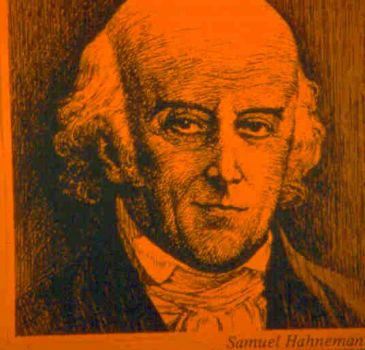 Samuel Hahnemann was a German physician who earned his Doctor of Medicine degree in 1779. At the time of his graduation, scientific advances were beginning to be seen in the fields of chemistry, physics, physiology and anatomy. The clinical practice of medicine, however, was rife with superstition and lack of scientific rigor. The treatments of the day, such as purgatives, bleeding, blistering plasters, herbal preparations and emetics lacked a rational basis and were more harmful than effective. Hahnemann recognized this and in several papers on topics such as Arsenic poisoning, hygiene, dietetics and psychiatric treatment, wrote critically of current practices.
Hahnemann initially experimented with quinine, which was then in use as a treatment for malaria, and found that when he ingested it, he developed malaria-like symptoms.
Hahnemann reasoned that such doses of these substances that produced clear symptoms would be an unsuitable method of treatment for diseases with the same symptoms. Through experimentation he therefore defined a system of reduction of the dose to infinitesimal levels by multiple serial dilutions of ten or hundred fold.
As well as a physical body, Hahnemann realised people have a �vital force�, or energy, the level where homoeopathic medicines work
He concluded from this experiment that to be effective , remedies must produce symptoms in healthy subjects that are similar to the diseases that they will treat He termed this principle the "Law of Similars" and this principle has been the basis for the science of homeopathy ever since.
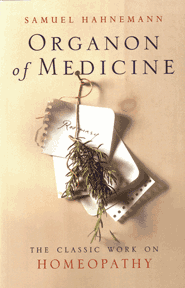 Hahnemanns first published volume of his results was called the Organon of Rational Therapeutics which he first published in 1810. The sixth edition, published in 1921, is still used today as homeopathy's basic text. Hahnemann practiced Homeopathic medicine for almost 50 years until his death in 1843.
Homeopathy had a large impact on the practice of medicine of the period. The first homeopathic hospital opened in 1832 and homeopathic medical schools opened all over Europe. Homeopathic hospitals and practitioners often had better outcomes compared to their allopathic counterparts.
During the second half of the 19th Century, allopathic medicine began to make significant advances in the approach to understanding and treating disease, partially driven by the competition offered by homeopathy, and by the early part of the twentieth century, the practice of homeopathy was in serious decline.
Homeopathy in New Zealand
Arriving in New Zealand in the mid 19th century, homeopathy flourished for over a hundred years as a mainstream form of medicine. There was even a well-regarded homeopathic hospital in central Auckland in the 1880�s. However, the introduction of the use of penicillin in WWII, amongst other allopathic advances, led to the world-wide decline of homeopathy as a widely-used branch of medicine. It wasn�t until the 1950s that homeopathy regained some of its status, this time primarily as a form of medicine used at home in the treatment of children�s illnesses and accidents. Over the following thirty years, more and more people began to search for a safe and effective alternative to the expensive and sometimes dangerous conventional medicines.
By the 1980s, interest in homeopathy in NZ had increased dramatically, which led to the formation of the Auckland College of Classical Homeopathy in 1984.
During the last 20 years more and more people are finding that conventional medicine does not solve their health issues, and treatment can have the effect of worsening symptoms, or give side effects that can also be serious, and in some cases, fatal. This factor, coming as it does in a time of greater access to alternative treatment options, through superior availability of information, help drive a steadily increasing amount of patients to seeking what were once alternative therapies, and which are quickly becoming mainstream healthcare options.
The entire homeopathic industry is poised for major global recognition.